WAREHOUSE & DISTRIBUTION AUTOMATION
Conveyor, sortation, tracking, and warehouse control systems built to improve throughput and reliability.
CONTROL SYSTEMS FOR THE COMPLETE MATERIAL FLOW
Industrial Systems Integrators designs and integrates automation systems for warehouses, distribution centers, fulfillment operations, and material-handling facilities.
ISI connects conveyors, scanners, sorters, packaging equipment, pallet-handling systems, automated storage equipment, PLCs, HMIs, warehouse control systems, and operating data into one coordinated system.
From receiving and product identification through storage, order fulfillment, palletizing, and outbound shipping, we develop controls around the actual movement of products through the facility.
WAREHOUSE & DISTRIBUTION AUTOMATION SERVICES
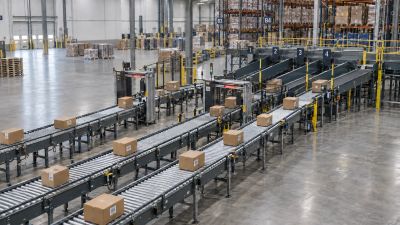
CONVEYOR CONTROL SYSTEMS
Control belt, roller, motor-driven roller, chain, case, tote, and pallet conveyors using coordinated PLC logic and equipment feedback.
SORTATION, MERGES & DIVERTS
Coordinate conveyor merges, diverts, transfers, sorters, lane assignments, and routing decisions without uncontrolled product contact.
ACCUMULATION & PRODUCT SPACING
Maintain controlled gaps between cartons, totes, and pallets using photoeyes, zone control, speed coordination, and zero-pressure accumulation.
BARCODE, RFID & PRODUCT TRACKING
Identify and track products through scanners, RFID systems, scales, dimensioners, printers, databases, and warehouse software.
PALLET HANDLING & AS/RS
Integrate pallet conveyors, transfers, lifts, turntables, stretch wrappers, palletizers, and automated storage and retrieval systems.
WCS, WMS & SCADA INTEGRATION
Exchange routing, order, inventory, equipment, alarm, and production data between warehouse controls and higher-level systems.
WAREHOUSE AND DISTRIBUTION OPERATIONS WE SUPPORT
- Distribution centers
- Fulfillment centers
- Cold-storage warehouses
- Food and beverage warehouses
- Consumer packaged goods facilities
- Manufacturing warehouses
- Parts distribution centers
- E-commerce operations
- Case and tote-handling systems
- Pallet-storage facilities
- Cross-docking operations
- Automated storage facilities
- Shipping and receiving systems
- Order-picking operations
- Packaging and palletizing areas
AUTOMATION FROM RECEIVING TO SHIPPING
RECEIVING
RECEIVING
RECEIVING
Identify incoming cartons, totes, pallets, and materials using barcode scanners, RFID readers, operator stations, and warehouse-system data.
INDUCTION
RECEIVING
RECEIVING
Introduce products into the automated conveyor system while verifying availability, spacing, identification, and routing information.
TRANSPORT
RECEIVING
ACCUMULATION
Coordinate conveyors, transfers, inclines, declines, lifts, and equipment interfaces to move products through the facility.
ACCUMULATION
ORDER FULFILLMENT
ACCUMULATION
Hold products in controlled zones while maintaining proper spacing and preventing unwanted contact or downstream congestion.
SORTATION
ORDER FULFILLMENT
ORDER FULFILLMENT
Route cartons, totes, or pallets to the correct lane, storage area, order, packaging cell, or outbound destination.
ORDER FULFILLMENT
ORDER FULFILLMENT
ORDER FULFILLMENT
Exchange product, order, destination, and completion data between the control system, warehouse control system, and warehouse management system.
PACKAGING
STAGING AND SHIPPING
STAGING AND SHIPPING
Coordinate case forming, sealing, labeling, weighing, inspection, palletizing, and stretch-wrapping equipment.
STAGING AND SHIPPING
STAGING AND SHIPPING
STAGING AND SHIPPING
Direct completed products to the proper staging lane, dock, trailer assignment, or outbound shipping area.
CONVEYOR AND ACCUMULATION CONTROLS
A reliable conveyor system requires coordinated speed, spacing, accumulation, and equipment availability across the entire route.
ISI develops conveyor controls using:
- Zone-based conveyor logic
- Zero-pressure accumulation
- Photoelectric sensor tracking
- Carton and tote spacing
- Conveyor speed coordination
- Motor-driven roller control
- Variable-frequency drives
- Product-release logic
- Downstream equipment status
- Jam and blockage detection
- Motor overload monitoring
- Emergency-stop monitoring
- Local and remote operating modes
- Equipment runtime tracking
Products are released only when the receiving zone or downstream equipment is available. This prevents one section from continuously feeding a stopped or congested conveyor.
MERGE, DIVERT, AND SORTATION CONTROL
Merges and sortation points are where poorly coordinated conveyor systems frequently lose throughput.
ISI develops logic that controls product entry, spacing, routing priority,
- Multi-lane conveyor merges
- High-speed diverts
- Pop-up transfers
- Right-angle transfers
- Sliding-shoe sorters
- Belt sorters
- Sortation lanes
- Reject lanes
- Recirculation loops
- Manual processing lanes
- Packaging-line handoffs
- Outbound shipping lanes
Routing decisions can be based on barcode data, product type, order information, destination, equipment availability, or operator selection.
BARCODE, RFID, AND PRODUCT TRACKING
Accurate product tracking requires more than installing a barcode scanner. The control system must associate each scan with the correct physical product and maintain that identity through transfers, accumulation zones, and equipment interfaces.
ISI integrates:
- Fixed barcode scanners
- Handheld barcode scanners
- RFID readers
- Vision systems
- Checkweighers
- Dimensioning equipment
- Print-and-apply labelers
- Tracking photoeyes
- Encoder-based tracking
- Order and destination data
- Reject and exception handling
- No-read recovery stations
Tracking logic can preserve product identity from receiving through storage, processing, packaging, staging, and shipment.
PALLET HANDLING AND AUTOMATED STORAGE
Pallet-handling systems require coordinated movement between conveyors, transfers, lifts, wrappers, palletizers, storage systems, and shipping areas.
ISI provides controls for:
- Powered roller pallet conveyors
- Chain transfers
- Turntables
- Pallet lifts and lowerators
- Pallet dispensers
- Palletizers and depalletizers
- Stretch wrappers
- Slip-sheet equipment
- Pallet identification
- Load-presence detection
- Automated storage and retrieval systems
- High-bay warehouse equipment
- Storage and retrieval conveyors
- Infeed and discharge stations
- Warehouse handoff points
Interlocks and permissives confirm that the load, transfer position, receiving equipment, and destination are ready before movement begins.
WCS, WMS, AND EQUIPMENT INTEGRATION
Warehouse automation depends on communication between physical equipment and the software managing inventory, orders, destinations, and production requirements.
ISI can integrate PLC-based controls with:
- Warehouse control systems
- Warehouse management systems
- Manufacturing execution systems
- Enterprise resource planning systems
- Order-management platforms
- Barcode and RFID databases
- Packaging systems
- Shipping systems
- Robotic cells
- Automated storage systems
- SCADA platforms
- Industrial historians
Data exchanges can include:
- Product identification
- Routing destination
- Order information
- Lane assignments
- Equipment availability
- Completion confirmation
- Reject status
- Inventory movement
- Production counts
- Downtime
- Alarm information
- System performance data
Communication failures, missing data, and rejected commands are monitored so operators can identify where the process stopped.
WAREHOUSE CONTROL-SYSTEM MODERNIZATION
Older distribution systems often contain obsolete PLCs, unsupported HMIs, undocumented programs, aging drives, and communication networks that are difficult to troubleshoot.
ISI provides planned warehouse-control upgrades that can include:
- Existing-system investigation
- PLC replacement
- HMI modernization
- Conveyor-control upgrades
- Motor-driven roller controller upgrades
- Drive replacement
- Scanner replacement
- Network modernization
- Remote I/O upgrades
- Alarm improvements
- Equipment-status diagnostics
- WCS and WMS interface updates
- Control-panel modifications
- Updated electrical drawings
- PLC and HMI program backups
- Phased installation planning
- Cutover and startup support
Upgrades can be divided into controlled phases around production schedules, planned shutdowns, and facility operating requirements.
SYSTEMS AND EQUIPMENT WE INTEGRATE
- Belt conveyors
- Powered roller conveyors
- Motor-driven roller conveyors
- Chain conveyors
- Case and tote conveyors
- Pallet conveyors
- Accumulation zones
- Conveyor merges
- Diverts and sorters
- Pop-up transfers
- Right-angle transfers
- Turntables
- Vertical lifts
- Barcode scanners
- RFID readers
- Vision systems
- Checkweighers
- Dimensioning systems
- Print-and-apply labelers
- Case erectors and sealers
- Palletizers and depalletizers
- Stretch wrappers
- Automated storage and retrieval systems
- Robotic cells
- AGV and AMR interfaces
- Programmable logic controllers
- Remote I/O systems
- HMI operator interfaces
- SCADA platforms
- Warehouse control systems
- Warehouse management systems
- Variable-frequency drives
- Servo systems
- Industrial Ethernet networks
- Control panels and motor-control equipment
DESIGNED FOR DISTRIBUTION OPERATIONS
CONTROLLED PRODUCT SPACING
CONTROLLED PRODUCT SPACING
CONTROLLED PRODUCT SPACING
Zone controls, sensors, and coordinated conveyor speeds maintain usable gaps between products throughout accumulation, merging, and sorting.
CLEAR JAM DIAGNOSTICS
CONTROLLED PRODUCT SPACING
CONTROLLED PRODUCT SPACING
HMI screens identify the affected conveyor, sensor, motor, zone, or downstream condition so maintenance personnel know where to begin.
PRODUCT TRACEABILITY
MAINTAINABLE CONTROL SYSTEMS
MAINTAINABLE CONTROL SYSTEMS
Scanner and tracking data follow cartons, totes, and pallets through routing decisions, processing steps, and warehouse handoffs.
MAINTAINABLE CONTROL SYSTEMS
MAINTAINABLE CONTROL SYSTEMS
MAINTAINABLE CONTROL SYSTEMS
Organized programs, consistent equipment naming, useful alarms, program backups, and current documentation simplify long-term support.
HOW ISI DELIVERS WAREHOUSE AUTOMATION PROJECTS
1. PROCESS & EQUIPMENT REVIEW
1. PROCESS & EQUIPMENT REVIEW
1. PROCESS & EQUIPMENT REVIEW
We review the material flow, conveyor layout, equipment interfaces, product types, operating rates, tracking requirements, and existing controls.
2. CONTROLS ENGINEERING
1. PROCESS & EQUIPMENT REVIEW
1. PROCESS & EQUIPMENT REVIEW
ISI develops control descriptions, network architecture, I/O requirements, panel designs, equipment sequences, routing logic, and implementation plans.
3. PROGRAMMING & INTEGRATION
3. PROGRAMMING & INTEGRATION
3. PROGRAMMING & INTEGRATION
We program PLCs, HMIs, drives, tracking systems, scanners, equipment interfaces, alarms, diagnostics, and warehouse-software communications.
4. TESTING & STARTUP
3. PROGRAMMING & INTEGRATION
3. PROGRAMMING & INTEGRATION
Control logic and equipment interfaces are tested before deployment and verified during installation, commissioning, and production startup.
COMMON WAREHOUSE AUTOMATION PROJECTS
- New conveyor-control systems
- PLC and HMI modernization
- Conveyor-line expansions
- Zero-pressure accumulation
- Multi-lane conveyor merges
- Sortation and divert systems
- Carton and tote tracking
- Barcode-scanner integration
- RFID-system integration
- No-read and reject stations
- Checkweigher integration
- Dimensioner integration
- Print-and-apply labeling
- Pallet-conveyor systems
- Pallet-conveyor systems
- Palletizer integration
- Stretch-wrapper integration
- Automated storage integration
- WCS and WMS integration
- Order-routing controls
- Packaging-line handoffs
- Shipping-lane controls
- Jam-detection improvements
- Alarm and diagnostic upgrades
- Control-panel replacements
- Industrial network upgrades
- Production and downtime reporting
WAREHOUSE & DISTRIBUTION AUTOMATION FAQ
Yes. ISI can control individual conveyor sections or coordinate complete systems containing accumulation, transfers, merges, diverts, sorters, scanners, packaging equipment, and pallet handling.
The control system can use zero-pressure accumulation, zone availability, sensor tracking, and speed coordination to maintain controlled spacing and prevent unwanted product contact.
Yes. We integrate fixed and handheld scanners, RFID readers, vision systems, printers, tracking sensors, and database information with PLC and warehouse control systems.
Yes. We can exchange routing, order, destination, completion, alarm, and equipment data with warehouse control systems, warehouse management systems, and other software platforms.
Often, yes. We review the existing PLCs, HMIs, drives, networks, scanners, panels, and field equipment to determine what can remain and what should be replaced.
Yes. ISI provides control-panel engineering, manufacturing, assembly, programming, testing, labeling, documentation, and field integration.
Yes. Projects can be divided into planned phases around operating schedules, production requirements, and available shutdown windows.
Related Industrial Services
INDUSTRIAL AUTOMATION
CONTROL PANEL MANUFACTURING
ELECTRICAL ENGINEERING
PLC, HMI, SCADA, drives, controls, and equipment integration for automated systems.
ELECTRICAL ENGINEERING
CONTROL PANEL MANUFACTURING
ELECTRICAL ENGINEERING
Develop power, control, instrumentation, communication, and installation designs for treatment facilities and remote utility sites.
CONTROL PANEL MANUFACTURING
CONTROL PANEL MANUFACTURING
CONTROL PANEL MANUFACTURING
Custom conveyor and warehouse control panels assembled, labeled, programmed, tested, and documented for field installation.
INDUSTRIAL ANALYTICS
CONTROL PANEL MANUFACTURING
CONTROL PANEL MANUFACTURING
Throughput, production counts, equipment status, downtime, alarms, routing results, trends, and operating data.