MANUFACTURING & OEM AUTOMATION SYSTEMS
PLC, HMI, robotics, motion control, machine safety, control panel, and production-line solutions for manufacturers and OEM machine builders.
CONTROL SYSTEMS BUILT AROUND HOW YOUR EQUIPMENT OPERATES
Industrial Systems Integrators designs, programs, manufactures, installs, and supports automation systems for production facilities and original equipment manufacturers.
ISI integrates machines, production lines, robots, conveyors, servo systems, inspection equipment, safety devices, PLCs, HMIs, control panels, industrial networks, and production data.
We can automate one machine, integrate multiple OEM systems into a complete line, standardize controls across an equipment platform, or modernize an operating manufacturing facility.
MANUFACTURING & OEM AUTOMATION CAPABILITIES
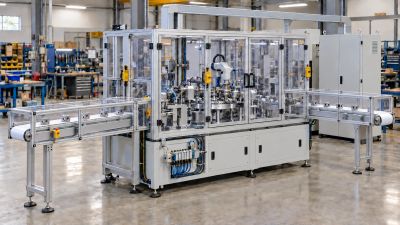
PRODUCTION-LINE AUTOMATION
Coordinate machines, conveyors, robots, inspection stations, material handling, packaging equipment, and production sequences.
OEM MACHINE CONTROLS
Develop repeatable control-system standards, PLC programs, HMI applications, electrical designs, and panels for OEM equipment.
ROBOTICS & MOTION CONTROL
Integrate robots, servo axes, coordinated motion, indexing systems, positioning equipment, and variable-speed drives.
MACHINE SAFETY INTEGRATION
Integrate emergency stops, guard interlocks, light curtains, safety relays, safety PLCs, and controlled restart sequences.
CONTROL PANELS & ELECTRICAL SYSTEMS
Design and manufacture PLC panels, machine-control panels, remote-I/O panels, VFD panels, and network enclosures.
PRODUCTION DATA & TRACEABILITY
Collect machine states, cycle times, alarms, counts, quality results, recipe data, downtime, and equipment performance information.
MANUFACTURING OPERATIONS WE SUPPORT
- OEM machine builders
- Discrete manufacturing
- Assembly operations
- Automotive and component manufacturing
- Metal fabrication
- Plastics and rubber manufacturing
- Building-product manufacturing
- Packaging operations
- Electronics manufacturing
- Consumer-product manufacturing
- Test and validation facilities
- Material-handling operations
- Machine and equipment rebuilders
- Contract manufacturers
- Industrial equipment manufacturers
PRODUCTION-LINE AUTOMATION
Individual machines must work together as one production system. ISI develops controls that coordinate equipment states, production flow, permissives, interlocks, faults, and recovery procedures across complete lines.
Production-line controls can include:
- Machine-to-machine handshaking
- Conveyor accumulation
- Product tracking
- Production sequencing
- Line start and stop control
- Upstream and downstream interlocks
- Equipment permissives
- Starved and blocked conditions
- Buffer and queue management
- Changeover control
- Recipe selection
- Reject tracking
- Fault recovery
- Line-status displays
- Production counters
- Cycle-time monitoring
- Downtime tracking
- Alarm and event histories
- Manual, maintenance, and automatic modes
The result is a coordinated line that gives operators clear information about what is running, what has stopped, and why production cannot continue.
OEM MACHINE CONTROL SYSTEMS
ISI works with original equipment manufacturers to create control systems that can be reproduced across individual machines, product families, and customer installations.
OEM services can include:
- Controls-platform selection
- Electrical design
- I/O architecture
- PLC programming
- HMI development
- Servo and motion programming
- Robot integration
- Machine-safety integration
- Control-panel manufacturing
- Machine networking
- Equipment testing
- Factory acceptance testing
- Installation support
- Startup and commissioning
- Customer documentation
- Software backups
- Remote troubleshooting where permitted
Standardized controls help OEMs reduce engineering time, simplify startup, improve documentation, and provide customers with a consistent operating experience.
OEM CONTROL PLATFORM STANDARDIZATION
An OEM should not have to redesign the entire control system for every machine order.
ISI can develop a reusable machine-control standard that includes:
- PLC hardware standards
- Standard I/O architecture
- Program templates
- Reusable equipment routines
- Standard tag structures
- HMI navigation standards
- Equipment faceplates
- Alarm standards
- Recipe structures
- User-access levels
- Network architecture
- Drive and servo standards
- Safety-device interfaces
- Electrical drawing templates
- Panel-construction standards
- Software version control
- Testing procedures
- Customer documentation packages
The standard can be expanded or modified for different machine sizes, options, customer specifications, and production requirements.
ROBOTICS, SERVO & MOTION CONTROL
ISI integrates motion and robotic equipment into machines and production lines where position, speed, timing, and coordinated movement are critical.
Systems can include:
- Industrial robots
- Collaborative robot interfaces
- Servo motors and drives
- Indexed conveyors
- Rotary index tables
- Gantry systems
- Linear actuators
- Pick-and-place systems
- Registration control
- Electronic gearing
- Coordinated motion
- Position verification
- Homing sequences
- Product tracking
- Robot-to-PLC communication
- Tool and fixture control
- Motion alarms and diagnostics
- Safe-position monitoring interfaces
Robot and motion systems are coordinated with the machine sequence, guarding, safety devices, product flow, and operator controls.
MACHINE SAFETY CONTROL INTEGRATION
Safety devices must work with the operating sequence without creating unclear restart conditions or difficult troubleshooting.
ISI integrates:
- Emergency-stop circuits
- Guard-door interlocks
- Safety relays
- Safety PLCs
- Light curtains
- Safety scanners
- Two-hand controls
- Safe torque off
- Trapped-key systems
- Safety mats
- Gate locking
- Zone-based safety
- Robot safety interfaces
- Controlled stopping
- Reset and restart sequences
- Safety-device diagnostics
- HMI safety status
- Safety-network interfaces
The final safety design and required performance are based on the documented machine risk assessment, equipment requirements, approved electrical design, and project specifications.
VISION, TESTING & QUALITY CONTROL
Automated inspection and testing systems can identify defects, verify assembly, track results, and remove failed products before they continue through production.
Systems can include:
- Machine-vision cameras
- Presence and orientation inspection
- Dimension verification
- Barcode and code reading
- Part identification
- Assembly verification
- Torque-result collection
- Pressure and leak testing
- Electrical testing
- Weight verification
- Reject mechanisms
- Failed-part tracking
- Quality-result storage
- Pass and fail counts
- Test-recipe selection
- Operator rework stations
- Quality alarms
- Production-report integration
HMI, SCADA, OEE & PRODUCTION DATA
ISI develops operator and production-data systems that show how equipment is performing and why production has stopped.
Capabilities include:
- Machine overview screens
- Line-status displays
- Equipment faceplates
- Alarm summaries
- Alarm and event histories
- Live and historical trends
- Recipe management
- Product and job selection
- Production counters
- Cycle-time monitoring
- Downtime reason tracking
- Reject and scrap tracking
- Quality-result collection
- Equipment runtime
- Maintenance counters
- OEE data collection
- Historian integration
- Database connectivity
- MES and ERP data exchange
- Production reports
Collected information can help production, engineering, maintenance, and management teams investigate losses and make operating decisions using actual machine data.
MACHINE & PRODUCTION-LINE MODERNIZATION
Older equipment can remain mechanically useful after its controls, drives, operator interfaces, and communication hardware become obsolete.
Modernization projects can include:
- Obsolete PLC replacement
- HMI migration
- Servo and motion upgrades
- VFD and motor-control replacement
- Robot-controller integration
- Remote-I/O replacement
- Safety-system upgrades
- Control-panel replacement
- Industrial network upgrades
- Sensor and instrumentation replacement
- Machine-vision integration
- Alarm and diagnostic improvements
- Software backups
- Electrical drawing updates
- Production-data integration
- Phased equipment cutovers
- Startup and production support
ISI reviews the existing machine before determining which components should be retained, replaced, or integrated into the updated system.
SYSTEMS & EQUIPMENT WE INTEGRATE
- PLCs and remote I/O
- HMI and SCADA systems
- Industrial PCs
- Robots and robot controllers
- Servo motors and drives
- VFDs and soft starters
- MCCs and motor controls
- Conveyors and accumulation systems
- Index tables and positioning systems
- Assembly machines
- Packaging equipment
- Pick-and-place systems
- Machine-vision cameras
- Barcode and identification systems
- Test and inspection equipment
- Pneumatic and hydraulic systems
- Sensors and instrumentation
- Safety PLCs and safety relays
- Guard switches and light curtains
- Industrial Ethernet networks
- Communication gateways
- Historians and databases
- PLC and machine-control panels
- Network and remote-I/O enclosures
BUILT FOR MANUFACTURING & OEM OPERATIONS
REPEATABLE MACHINE PERFORMANCE
REPEATABLE MACHINE PERFORMANCE
REPEATABLE MACHINE PERFORMANCE
Coordinate equipment through documented sequences, permissives, interlocks, recipes, and recovery procedures.
FASTER TROUBLESHOOTING
REPEATABLE MACHINE PERFORMANCE
REPEATABLE MACHINE PERFORMANCE
Give operators and maintenance teams clear machine states, alarm details, device status, and fault-location information.
STANDARDIZED OEM DESIGNS
STANDARDIZED OEM DESIGNS
STANDARDIZED OEM DESIGNS
Reuse proven program structures, HMI standards, drawings, panels, and testing procedures across multiple machines.
EXPANDABLE AUTOMATION
STANDARDIZED OEM DESIGNS
STANDARDIZED OEM DESIGNS
Use control platforms, networks, and programming structures that can support future equipment and production requirements.
FROM MACHINE REQUIREMENTS TO PRODUCTION
1. MACHINE & PROCESS REVIEW
1. MACHINE & PROCESS REVIEW
1. MACHINE & PROCESS REVIEW
We review the equipment, production sequence, cycle-time requirements, motion, safety devices, inspection needs, customer standards, and existing documentation.
2. CONTROLS ENGINEERING
1. MACHINE & PROCESS REVIEW
1. MACHINE & PROCESS REVIEW
We develop the control architecture, I/O requirements, electrical drawings, network plan, panel design, software structure, and sequence of operation.
3. PROGRAMMING & PANEL BUILD
3. PROGRAMMING & PANEL BUILD
3. PROGRAMMING & PANEL BUILD
ISI programs the PLC, HMI, robots, motion systems, drives, inspection equipment, and communication interfaces while manufacturing the required control panels.
4. TESTING & STARTUP
3. PROGRAMMING & PANEL BUILD
3. PROGRAMMING & PANEL BUILD
We test the machine, verify sequences and interlocks, support factory acceptance testing, commission the equipment, and assist during production startup.
COMMON MANUFACTURING & OEM PROJECTS
- Complete machine-control systems
- Production-line integration
- OEM controls standardization
- PLC and HMI programming
- Robot integration
- Servo and motion-control systems
- Conveyor and accumulation controls
- Assembly-machine automation
- Packaging-machine controls
- Machine-vision systems
- Test-stand controls
- Inspection and reject systems
- Recipe and changeover controls
- Machine-safety integration
- Control-panel manufacturing
- PLC and HMI modernization
- VFD and servo upgrades
- Industrial network integration
- MES and ERP data exchange
- OEE and downtime collection
- Factory acceptance testing
- Installation and commissioning
- Startup and troubleshooting support
MANUFACTURING & OEM AUTOMATION FAQ
Yes. ISI supports manufacturers operating production equipment and OEMs designing machines for their customers.
Yes. ISI can develop reusable PLC structures, HMI standards, electrical designs, panel standards, network architecture, testing procedures, and documentation for an OEM machine family.
Yes. ISI can develop machine handshakes, line controls, product tracking, conveyor logic, centralized HMI screens, alarm collection, and production-data systems.
Yes. ISI integrates industrial robots, servo drives, indexing systems, coordinated motion, and robot-to-PLC communications as part of machine and line-control projects.
Yes. ISI can replace obsolete controllers, HMIs, drives, remote I/O, safety hardware, networks, and control panels while retaining suitable mechanical equipment.
Yes. ISI can manufacture PLC panels, machine-control panels, remote-I/O panels, VFD panels, safety panels, and network enclosures.
Yes. ISI can support internal testing, factory acceptance testing, installation, commissioning, customer-site startup, production ramp-up, and troubleshooting.
Related Industrial Services
INDUSTRIAL AUTOMATION
CONTROL PANEL MANUFACTURING
ELECTRICAL ENGINEERING
PLC, HMI, SCADA, drives, controls, and equipment integration for automated systems.
ELECTRICAL ENGINEERING
CONTROL PANEL MANUFACTURING
ELECTRICAL ENGINEERING
Create machine power, control, safety, network, panel, and installation designs for manufacturing equipment.
CONTROL PANEL MANUFACTURING
CONTROL PANEL MANUFACTURING
CONTROL PANEL MANUFACTURING
Build documented PLC, machine-control, remote-I/O, VFD, safety, and network panels for production equipment.
OPERATIONAL TECHNOLOGY
CONTROL PANEL MANUFACTURING
CONTROL PANEL MANUFACTURING
Connect machines, production lines, databases, monitoring platforms, and business systems through industrial networks.